When your car needs repairs or maintenance, deciding where to get it fixed can feel like a big task. Should you call a mobile mechanic to come to your location, or take your vehicle to a dealership repair shop? Both options offer distinct advantages, but they differ in cost, convenience, and quality. This article breaks down these differences to help you choose the best option based on what matters most—saving money, saving time, or ensuring reliable repairs. Using clear, simple language, we’ll explore the pros and cons of each to address your car repair needs, keeping you engaged with practical solutions and real-world outcomes.
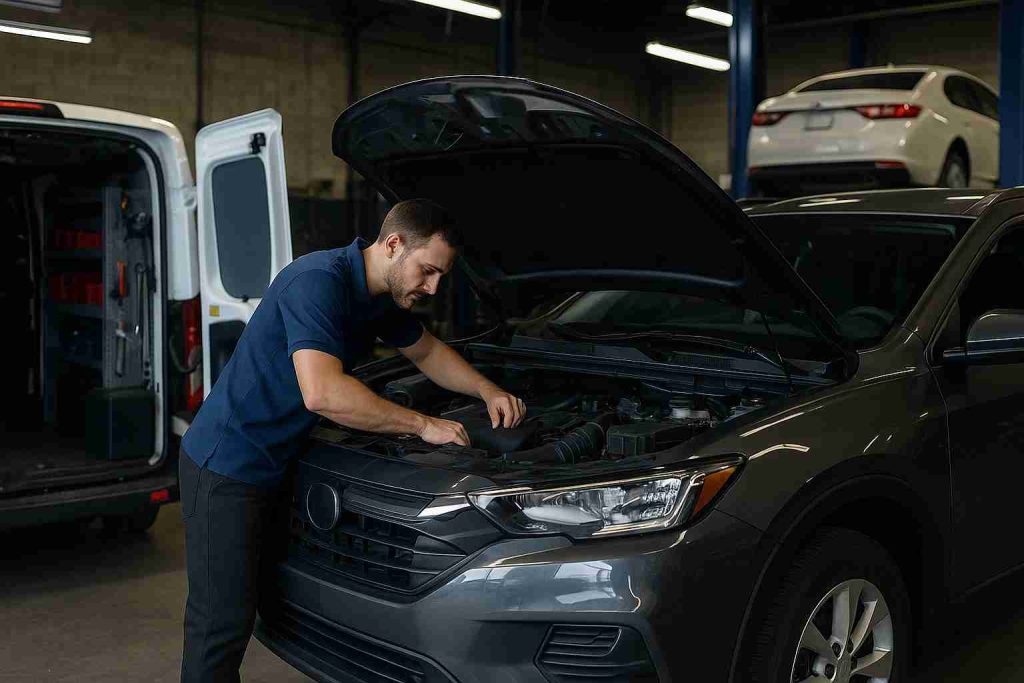
Table of Contents
Why Your Repair Choice Matters
Car repairs are unavoidable, but they don’t have to be stressful. The right repair service can save you money, time, and prevent future issues. Most people want affordable prices, easy scheduling, and confidence that their car is fixed properly. Mobile mechanics and dealerships meet these needs in different ways, and understanding their strengths helps you avoid overpaying or dealing with poor-quality work. Let’s explore what each option offers and how they solve common car repair challenges.
What Is a Mobile Mechanic?
A mobile mechanic is a professional who travels to your location—home, work, or even a parking lot—to repair your car. Instead of working in a traditional shop, they carry tools and expertise in a van or truck. They handle tasks like oil changes, brake repairs, diagnostics, and minor engine work, offering a convenient solution for many drivers.
Benefits of Mobile Mechanics
- Time-Saving: You don’t need to drive to a shop, wait in a lobby, or arrange transportation. The mechanic comes to you, often within hours.
- Affordable Pricing: With lower overhead than dealerships, mobile mechanics typically charge less for services like battery replacements or brake repairs.
- Personal Touch: Often a one-person operation, mobile mechanics provide direct communication, fostering trust and clarity.
- Flexible Hours: Many offer evening or weekend appointments, ideal for busy schedules.
Common Problems Solved
Picture your car refusing to start in your driveway. A mobile mechanic can diagnose and fix the issue on-site, often faster than towing it to a dealership. For instance, replacing a dead battery or fixing a flat tire doesn’t require a shop, saving you towing fees and time.
What Is Dealership Repair?
Dealership repair shops are service centers connected to specific car brands, like Honda, Chevrolet, or Mercedes-Benz. They specialize in your vehicle’s make, using manufacturer-approved parts and trained technicians. These shops are often chosen for complex repairs or warranty-covered services.
Benefits of Dealership Repairs
- Expert Knowledge: Technicians receive training specific to your car’s brand, making them ideal for intricate repairs like transmission or electrical work.
- OEM Parts: Dealerships use original equipment manufacturer parts, ensuring compatibility and often longer-lasting repairs.
- Warranty Support: If your car is under warranty, dealerships may provide free or discounted repairs, especially for recalls.
- Advanced Tools: Dealerships have specialized diagnostic equipment, crucial for modern vehicles with complex systems.
Common Problems Solved
If your car has a confusing warning light or needs a recall fix, a dealership’s expertise and tools can resolve it quickly. For example, a brand-specific issue like a faulty sensor in a new vehicle is often best handled by a dealership with the right software.
Comparing Costs: Mobile Mechanic vs. Dealership
Cost is a major concern for car owners. Nobody wants to spend more than necessary on repairs. Let’s compare how mobile mechanics and dealerships differ in pricing, focusing on common services.
Mobile Mechanic Costs
Mobile mechanics often charge less due to lower overhead. Typical prices include:
- Oil Change: $50–$100, depending on oil type.
- Brake Pad Replacement: $100–$250 per axle.
- Battery Replacement: $100–$200, including the battery.
- Diagnostic Fee: $50–$150, often waived if repairs are done.
These estimates reflect common services, and since mobile mechanics come to you, you avoid towing or transportation costs.
Dealership Repair Costs
Dealerships generally have higher prices due to specialized labor and OEM parts. Typical costs are:
- Oil Change: $80–$150, often with premium oils.
- Brake Pad Replacement: $200–$400 per axle, depending on the brand.
- Battery Replacement: $150–$300, with brand-specific batteries.
- Diagnostic Fee: $100–$200, even for minor issues.
Higher costs at dealerships can be offset by warranty coverage, making them a better deal for certain repairs.
Cost-Saving Tips
- Request Estimates: Contact both a mobile mechanic and dealership for quotes before deciding.
- Look for Deals: Mobile mechanics may offer first-time discounts, while dealerships sometimes have service specials.
- Focus on Essentials: Prioritize critical repairs, like brakes, over cosmetic fixes to stay within budget.
Convenience: Which Is Easier?
When your car breaks down, convenience can make or break your day. Let’s compare how mobile mechanics and dealerships handle ease of service, addressing common needs like fast repairs.
Mobile Mechanic Convenience
Mobile mechanics are designed for ease. They come to you, eliminating the need to:
- Drive a faulty car to a shop.
- Pay for a tow truck.
- Wait in a repair shop or arrange a ride.
For example, if your car fails at work, a mobile mechanic can fix it in the parking lot while you continue your day. Many offer same-day service, perfect for busy schedules.
Dealership Convenience
Dealerships are less flexible. You usually need to:
- Book an appointment days or weeks ahead.
- Drop off your car and find alternative transportation.
- Wait for repairs, which can take hours or days for complex issues.
Some dealerships offer loaner cars or shuttle services, which can reduce the hassle. Check with your local dealer for these perks.
Convenience Tips
- Ask About Timing: Mobile mechanics are often quicker for simple jobs, while dealerships may prioritize warranty repairs.
- Plan Ahead: For non-urgent repairs, schedule early with a dealership to avoid delays.
- Use Mobile for Quick Fixes: Reserve dealership visits for major repairs and use mobile mechanics for routine maintenance.
Quality: Can You Trust the Work?
Quality is critical—nobody wants a repair that fails soon after. Both mobile mechanics and dealerships can deliver excellent results, but their approaches vary. Let’s explore what affects repair quality.
Mobile Mechanic Quality
Mobile mechanics can provide reliable repairs, especially for routine or common issues. Quality depends on:
- Experience: Choose mechanics with strong reviews or certifications, like ASE.
- Tools: They may lack specialized equipment for complex repairs, such as reprogramming a car’s computer.
- Parts: Aftermarket parts are common, which are cheaper but may not last as long as OEM parts.
For example, a mobile mechanic can install a quality aftermarket alternator, saving money without compromising reliability for most cars.
Dealership Repair Quality
Dealerships are known for consistent quality, particularly for brand-specific repairs. Their strengths include:
- Trained Technicians: Mechanics undergo brand-specific training, making them experts in your vehicle’s systems.
- OEM Parts: These parts are designed for your car, often with longer warranties.
- Accountability: Dealerships are tied to the brand’s reputation, encouraging high standards.
For complex issues, like hybrid battery repairs, dealerships often provide superior results due to specialized tools.
Ensuring Quality
- Read Reviews: Check online feedback for mobile mechanics or dealerships to gauge reliability.
- Ask About Warranties: Both should offer warranties on parts and labor, typically 12 months or 12,000 miles.
- Seek Transparency: Request a clear explanation of the repair process for confidence in the work.
When to Choose a Mobile Mechanic
Mobile mechanics are ideal in these situations:
- You need fast, simple repairs like oil changes, battery replacements, or tire fixes.
- Your car won’t start, and you need on-site help.
- You want to save money on routine maintenance.
- Your schedule doesn’t allow for a shop visit.
- You prefer avoiding the hassle of driving to a repair facility.
For example, a mobile mechanic is perfect for a busy professional needing a quick brake repair at home.
When to Choose a Dealership
Dealerships are better suited for:
- Cars under warranty or needing recall repairs.
- Complex issues, like transmission or electrical problems.
- Luxury or specialized vehicles requiring brand-specific parts.
- Situations where you prioritize OEM parts and trained technicians.
For instance, a new BMW with a software issue is best handled by a dealership with the right tools.
Real-World Examples: Making the Choice
Here are two scenarios to help you decide.
Scenario 1: Dead Battery
Your car won’t start before work. A mobile mechanic can arrive in an hour and replace the battery for $150. A dealership requires towing and charges $250. Choice: Mobile mechanic—faster and more affordable for a simple fix.
Scenario 2: Check Engine Light
Your new Ford has a check engine light. A mobile mechanic might diagnose it but lacks the software to reprogram the system. The dealership can fix it properly, possibly under warranty. Choice: Dealership—specialized tools and warranty coverage ensure quality.
How to Make the Best Decision
To choose between a mobile mechanic and a dealership, consider:
- Repair Type: Simple fixes like brakes suit mobile mechanics; complex issues like engine repairs may need a dealership.
- Urgency: Mobile mechanics are faster for emergencies.
- Budget: Mobile mechanics are cheaper, but dealerships may be free under warranty.
- Car Make: Luxury or specialized vehicles often benefit from dealership expertise.
Online discussions, like those on Reddit, share experiences of saving money with mobile mechanics or praising dealerships for warranty repairs.
Tips for Great Result
To get the most value from either option:
- Research Providers: Look for top-rated mobile mechanics or dealerships in your area.
- Ask Questions: Request detailed cost and timeline breakdowns.
- Maintain Regularly: Routine care, like oil changes, prevents costly repairs.
- Keep Records: Save repair receipts to track warranties and maintenance.
Conclusion: Your Best Path Forward
Deciding between a mobile mechanic and a dealership repair shop depends on your priorities, budget, and vehicle. Mobile mechanics offer unmatched convenience and lower costs for routine or urgent fixes, ideal for busy drivers needing quick solutions. Dealerships provide specialized expertise and OEM parts, perfect for complex repairs or warranty-covered services. By weighing cost, convenience, and quality, you can choose the option that saves you time, money, and stress. Next time your car needs attention, use these insights to make a confident decision.
FAQs
Are mobile mechanics cheaper than dealerships?
Yes, mobile mechanics often charge less because they don’t have the high costs of a big shop. This means you can save money on services like oil changes and brake repairs.
Is a mobile mechanic as good as a dealership?
For simple jobs like battery changes or brake fixes, mobile mechanics are just as good. But for big problems, like engine or computer issues, a dealership might be better.
Can mobile mechanics fix my car at home?
Yes, mobile mechanics come to your home, work, or wherever your car is. They can do many repairs on the spot, saving you time and the hassle of going to a shop.
Should I go to a dealership for a check engine light?
If your car is under warranty or has a complex issue, the dealership is a good choice. They have special tools and trained staff to handle these problems.
Do mobile mechanics use quality parts?
Many mobile mechanics use aftermarket parts, which are usually cheaper. Dealerships use original parts made by your car’s manufacturer, which can be more expensive.
Is it faster to use a mobile mechanic or a dealership?
Mobile mechanics can often come to you quickly, sometimes the same day. Dealerships may require you to book an appointment and wait longer for service.
Can mobile mechanics do warranty repairs?
No, if your car is still under warranty, you should go to the dealership. They can fix warranty issues at no cost to you.
When should I choose a mobile mechanic over a dealership?
Choose a mobile mechanic for quick, simple fixes like oil changes or battery replacements. Go to a dealership for major repairs, recalls, or warranty work.