When you’re stuck on the side of the road with a broken-down car, the last thing you need is confusion about what to do next. While traditional tow truck services are helpful in many situations, sometimes calling a mobile mechanic is a faster, cheaper, and smarter choice. This guide walks you through when to call for emergency roadside assistance and when a mobile mechanic is the better option—saving you time, money, and stress.
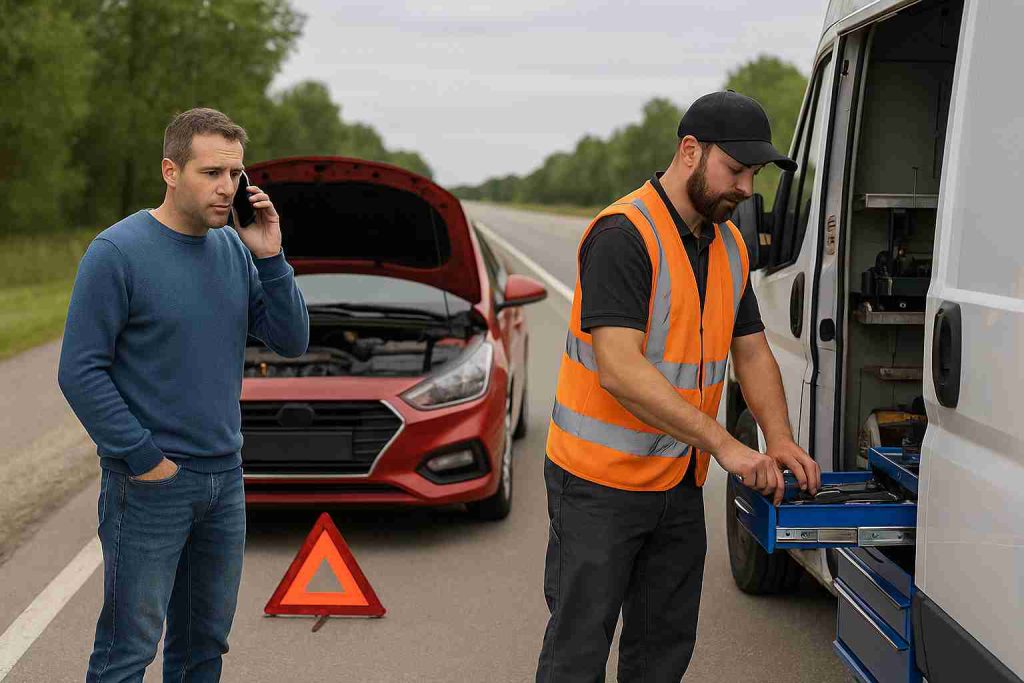
Table of Contents
1. What Is Emergency Roadside Assistance?
Emergency roadside assistance is a service that helps drivers when their car breaks down or becomes unusable while they’re on the road. It’s designed to get you moving again—or at least get you safely to the nearest repair shop.
Typical services include:
- Battery jump-starts
- Flat tire changes
- Fuel delivery
- Lockout help
- Towing
These services are usually offered through auto clubs, car insurance companies, or standalone service providers. But here’s the catch: not every issue needs a tow. That’s where a mobile mechanic shines.
2. What Does a Mobile Mechanic Do?
A mobile mechanic is a certified professional who brings the auto shop to your location. That means instead of towing your car to a garage, a trained mechanic shows up wherever you are—home, parking lot, or roadside—and fixes your vehicle on the spot.
Services mobile mechanics commonly provide:
- Engine diagnostics
- Battery replacement
- Starter or alternator issues
- Brake repairs
- Fluid leaks
- Radiator problems
They carry tools, parts, and equipment needed for most common repairs. Best of all, you don’t lose hours waiting at a repair shop.
3. Common Car Problems That Can Be Fixed on the Spot
Most car issues that leave you stranded can be solved without towing. Here are common breakdown causes mobile mechanics can fix right where you are:
- Dead battery – Jump start or full replacement.
- Flat tire – Patch or replace if a spare is available.
- Overheating engine – Radiator fixes or coolant top-up.
- Brake failure – Brake pad replacement or line inspection.
- Starter/alternator failure – Diagnostics and replacement.
- Low fluids – Oil, brake fluid, or transmission fluid refills.
If it doesn’t need a car lift, there’s a good chance a mobile mechanic can fix it.
4. When to Call a Mobile Mechanic Instead of a Tow Truck
You should call a mobile mechanic when:
- The problem seems minor or clearly identifiable.
- You’re in a safe, stable location.
- Your vehicle still has power or turns on.
- You want to avoid the hassle and cost of a tow and repair combo.
Some examples:
- Your car won’t start but you recently replaced the battery.
- The check engine light is on, but the car is still drivable.
- Your brakes feel spongy and unsafe.
- There’s a small leak under the car, but you’re not sure what it is.
Calling a mobile mechanic saves you from unnecessary towing fees and long shop wait times. You get back on the road faster.
5. Situations Where You Still Need a Tow Truck
While mobile mechanics can fix a lot, some situations do call for a tow truck:
- Major engine failure
- Transmission problems
- Severe overheating with smoke
- Car accidents with visible body damage
- Broken axle or suspension failure
- Car is in an unsafe or difficult-to-reach location
If your vehicle is undrivable or not safe to work on roadside, call a tow truck first. Safety comes first—for you and the mechanic.
6. Real-Life Scenarios: What Most Drivers Face
Let’s look at common emergency scenarios where mobile mechanics are the hero:
Scenario 1: Dead Battery in a Shopping Center Lot
- You left the lights on. The car won’t start. Mobile mechanic jumps it and tests the battery. You’re on your way in under 30 minutes.
Scenario 2: Brake Issues Before a Long Drive
- You hear grinding while braking. A mobile mechanic changes your pads and inspects your rotors at home. No need to cancel your road trip.
Scenario 3: Engine Light on After Work
- Car still runs fine. A mobile mechanic does a quick diagnostic at your office, replaces a failed sensor, and clears the code.
These are all real problems solved without ever stepping foot in a repair shop.
7. Cost Comparison: Mobile Mechanic vs. Traditional Shop
One of the biggest myths is that mobile mechanics are more expensive. In many cases, they are more affordable—and here’s why:
| Service Type | Traditional Shop | Mobile Mechanic |
|---|---|---|
| Towing Fee | $75–$150 | $0 |
| Diagnostic Fee | $100 | $50–$75 |
| Wait Time | 2–4 days | Same day |
| Convenience | Low | High |
You pay for service, not for overhead. No waiting room. No upsells. Just repairs.
8. How to Find a Trusted Mobile Mechanic Near You
Finding the right person is key. Here’s how:
- Search Google with real terms like “mobile mechanic near me open now” or “24 hour mobile mechanic in [your city]”
- Read reviews – Look for detailed ones that mention speed, honesty, and results.
- Ask neighbors or coworkers – Word of mouth is powerful.
- Check for certifications – Look for ASE or manufacturer-specific credentials.
- Call and ask – Get a quote and see how professional they sound.
Pro tip: Save their number in your phone before you need them. You don’t want to scramble when your car breaks down at night.
9. Safety Tips When Waiting for Help
While help is on the way, your safety is top priority.
- Pull off the road if possible.
- Turn on hazard lights immediately.
- Use roadside flares or triangles at night or in bad weather.
- Lock doors and stay inside if in a remote area.
- Avoid strangers offering unsolicited help—wait for the verified mechanic.
Know your location so you can give accurate directions. Look for landmarks, mile markers, or nearby businesses.
10. How to Prevent Breakdowns in the First Place
The best emergency is the one that never happens. Here’s how to reduce your chances of needing roadside help:
- Regular oil changes
- Check battery health twice a year
- Inspect brakes every 10,000 miles
- Top off fluids monthly
- Replace worn belts and hoses
- Keep tires properly inflated and rotated
Also, listen to your car. If something feels off—sounds, smells, vibrations—get it checked before it becomes a bigger issue.
Final Thoughts
Emergency roadside situations can happen to anyone. But knowing when to call a mobile mechanic gives you a powerful, time-saving option. It’s not just about fixing a car—it’s about reducing stress, avoiding long waits, and getting back to life faster.
Whether you’re in the middle of your commute or getting ready for a family trip, having a trusted mobile mechanic’s number in your contacts gives you peace of mind.
Next time your car gives you trouble, don’t panic. Think smart, stay safe, and consider calling a mobile mechanic first. It might be the fastest way to keep your wheels turning.
FAQs
What can a mobile mechanic fix in DeSoto roadside?
In DeSoto, mobile mechanics fix dead batteries, flat tires, leaks, and brake issues right where your car stops—no need for towing in most cases.
How fast does a mobile mechanic get to DeSoto?
Most mobile mechanics reach DeSoto drivers in 30–60 minutes. They’re often quicker than a tow truck and ready to fix the issue on the spot.
Is calling a mobile mechanic in DeSoto cheaper?
Yes. In DeSoto, you skip towing and high shop costs. Mobile mechanics charge less and fix your car directly at your home or roadside.
When do I still need a tow truck in DeSoto, TX?
Call a tow truck in DeSoto if your car won’t start at all, has engine damage, or is stuck in a dangerous or blocked-off spot on the road.
Can a mobile mechanic help in DeSoto traffic?
Yes, mobile mechanics in DeSoto work during traffic. They come to your driveway, office, or roadside with tools and parts ready to fix your car.
Are DeSoto mobile mechanics certified or licensed?
Trusted mobile mechanics in DeSoto are certified and follow Texas rules. Always ask for proof of license or certification before hiring.
What to ask before hiring a DeSoto mobile mechanic?
Ask about ETA, service cost, tools, and if they’re ASE certified. This ensures they can handle your car issue quickly and at a fair price.
Do DeSoto mobile mechanics give full quotes upfront?
Yes. Reputable DeSoto mobile mechanics give you a clear quote with all fees before starting the work, so there are no surprise costs later.