A strange burning odor coming from your car can be alarming. It might seem minor, but that smell often signals a serious problem under the hood. Ignoring this warning could cost you time, money, and your safety on DeSoto’s roads. This article explains what can cause a burning smell, why you shouldn’t ignore it, how to handle it right away, and how to prevent it in the future.
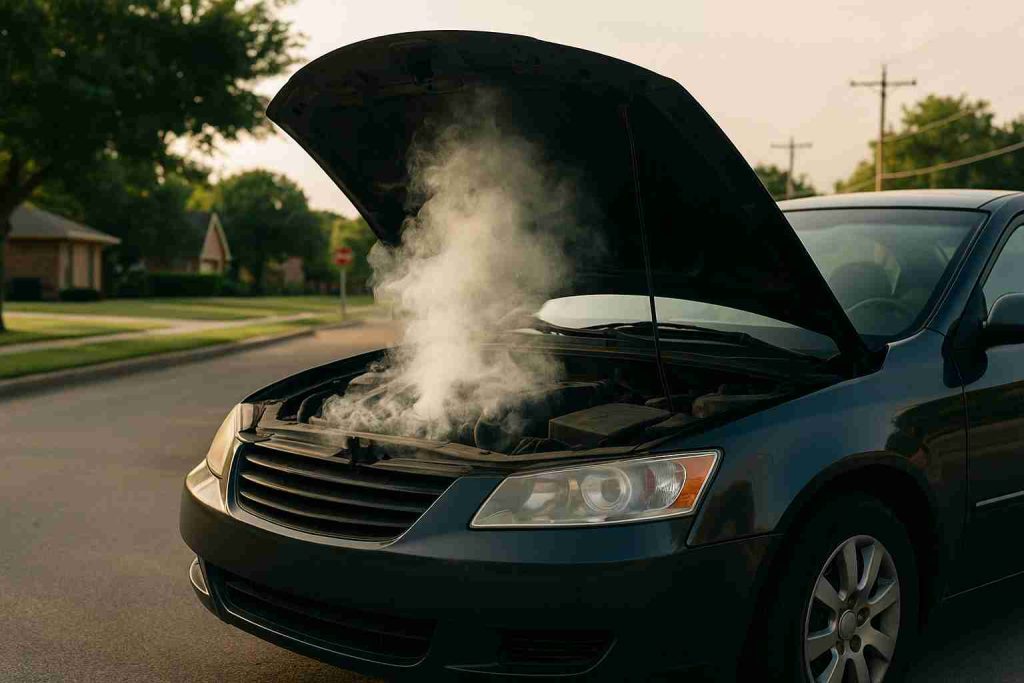
Table of Contents
What Is That Burning Smell?
When your car emits a burning smell, it usually resembles burnt plastic, hot metal, or scorched rubber. The odor can originate from various parts of your vehicle, such as the engine bay, brakes, or air vents. Pay attention to when and where you notice it:
- Right after starting the engine: Could be oil or coolant leaking onto hot engine parts.
- When braking: Often a sign of overheated brake pads or a stuck caliper.
- During acceleration: May indicate a slipping clutch or transmission issue.
- While idling with the AC on: Could point to an electrical problem or debris in the vents.
Noting these details helps you and your mechanic pinpoint the cause faster. Trust your nose—if something smells off, it probably is.
Common Causes of Burning Smell in Cars
1. Oil Leak Onto Hot Parts
Engine oil can drip from worn gaskets or damaged seals. When oil lands on a hot component like the exhaust manifold, it burns and creates a strong, acrid smell. Warm Texas summers can worsen leaks, so check seals regularly.
2. Coolant Leak or Overheating
Coolant contains chemicals that smell sweet when fresh but pungent when burnt. A leak in a radiator hose or a failing water pump can let coolant hit hot engine parts, producing a noticeable odor. An overheating engine risks warped heads or a cracked block.
3. Burning Rubber from Belts
The serpentine belt, timing belt, and hoses all use rubber. If a belt slips or misaligns, it rubs against a pulley and overheats. That friction generates a burning rubber scent, especially under heavy loads like uphill drives on US‑67.
4. Overheated Brakes
If your brakes overheat, you may smell burning brake pads. Riding the brakes down Belt Line Road or steep roads near Elgin B. Robertson Park can cause this. Low brake fluid or sticky calipers keep pads pressed against rotors, heating them up.
5. Clutch Slippage in Manual Cars
On manual transmission vehicles, excessive slipping or a worn clutch can create a burning smell under load—like accelerating onto Interstate 35E. The smell resembles burnt toast and indicates clutch disc overheating.
6. Electrical Shorts or Wiring Issues
Electrical problems often smell like burning plastic. If insulation melts or connectors overheat, it poses a fire risk. Faulty alternators, jammed relays, or improperly installed accessories can be culprits.
7. Debris in the Engine Bay
Leaves, plastic bags, or paper can get caught under the hood or near the exhaust. When they heat up, they burn and produce a strong odor. Check for debris after driving on gravel roads or through areas with loose litter.

Risks of Ignoring the Burning Smell
Ignoring that smell can lead to several serious issues:
- Costly Repairs: A minor oil leak can escalate into a blown head gasket or seized engine. Small issues often become big repairs. Fixing a leaking gasket costs far less than replacing an entire engine block.
- Safety Hazards: Overheated brakes lose stopping power, raising accident risk—especially at busy intersections like Belt Line and Cockrell Hill. Electrical shorts can spark engine fires, endangering you and others.
- Stranding and Inconvenience: A breakdown on I‑35E or US‑67 during peak traffic can leave you stuck for hours. Getting stranded with a smoking engine or smoking brakes is both dangerous and inconvenient.
- Environmental Impact: Leaking fluids like oil and coolant harm the environment. They contaminate soil and water, affecting neighborhoods like Sunset Hills and Husdon Oaks.
What to Do When You Smell Burning
Pull Over Safely: At the first sign of a burning odor, find a safe spot to pull over—like the DeSoto Town Center parking lot. Use hazard lights to alert other drivers.
Turn Off the Engine: Shutting off the engine stops further heat buildup and reduces fire risk. It also prevents additional damage.
Inspect for Visible Issues: Let the car cool for a few minutes, then look under the hood:
- Check for oil or coolant leaks on engine parts.
- Smell near belts and hoses for burning rubber odor.
- Inspect brake rotors through wheel gaps for discoloration.
- Scan wiring and connectors for melted insulation.
Only inspect if safe—avoid touching hot parts.
Call for Professional Help: If you can’t safely identify or fix the problem, contact a trusted DeSoto mechanic. Keep the number of a local tow service or roadside assistance handy. Describe the smell and any visible signs so they arrive prepared.
Preventing Future Burning Smells
1. Regular Maintenance Checks
Schedule routine service every 5,000–7,000 miles or every six months. Regular inspections catch leaks, worn belts, and low fluids before they become serious.
2. Maintain Proper Fluid Levels
Check engine oil, coolant, brake fluid, and transmission fluid regularly. Top up or replace fluids as needed. Use coolant rated for Texas heat to prevent overheating.
3. Replace Worn Belts and Hoses
Belts and hoses degrade over time. Replace them at manufacturer-recommended intervals or when you spot cracks or fraying. A new belt runs quietly and reduces burning rubber odors.
4. Keep the Engine Bay Clean
Periodically remove debris like leaves and dirt. A tidy engine bay lowers the risk of foreign materials catching fire or causing smells.
5. Practice Safe Driving Habits
Avoid constant braking on long descents and shift gears properly in manual cars. Let brakes cool on downhill stretches and accelerate smoothly to reduce stress on the clutch.
When to Seek Professional Help
Even with good maintenance, some issues need expert attention:
| Symptom | Possible Issue | Action Needed |
|---|---|---|
| Persistent burning smell | Oil/coolant leak, electrical issue | Visit mechanic immediately |
| Smoke from engine bay | Serious leak or overheating | Do not drive—tow to garage |
| Soft or spongy brake pedal | Low brake fluid or worn pads | Check fluid, replace pads |
| Clutch slipping or burnt odor | Worn clutch components | Get clutch adjustment or replacement |
| Dashboard warning lights | Engine temp, oil pressure, etc. | Diagnose with OBD scanner |
- Local Shops to Trust: Consider DeSoto Auto & Tire on Belt Line Road or Mike’s Auto Repair near I‑35E for thorough inspections and genuine parts.
Conclusion
A burning smell in your car is more than an annoyance it’s your car’s way of asking for help. From minor oil drips to serious brake issues, that odor can save you from major breakdowns, high repair bills, and unsafe situations on DeSoto’s roads. By understanding common causes, taking quick action, and sticking to preventive maintenance, you’ll keep your car running smoothly and your drives worry-free. Don’t wait until it’s too late if you smell something burning, treat it as an urgent warning and act now.
FAQs
Why does my car smell like burning rubber?
Burning rubber smell often comes from slipping belts or worn hoses rubbing against pulleys. Check belt alignment and replace worn belts to stop the smell. Regular inspections help prevent damage.
Car burning smell when I brake?
A burning odor while braking usually means overheating pads or sticky calipers. Pull over, let brakes cool, and have a mechanic inspect your brake fluid and calipers to restore safe stopping.
Burning smell from engine when starting?
Smell at startup often means oil or coolant leak on hot parts. Turn off engine, inspect for leaks, and fix gaskets or hoses to avoid bigger engine damage.
Why my car smells like smoke while idling?
Idle smoke smell may signal electrical shorts or debris in vents. Turn off the AC, inspect wiring and vents, and clear any leaves or trash to protect against fires.
What to do if car smells burning in DeSoto?
If you smell burning in DeSoto, pull over safely, shut off the engine, and check fluids and belts. Call a local DeSoto mechanic like DeSoto Auto & Tire for a quick and reliable inspection.
How to prevent burning smells in car?
Prevent smells with regular service every 5,000–7,000 miles. Check fluid levels, inspect belts and hoses, clean engine bay, and practice safe driving to reduce stress on your car’s components.
Is it safe to drive with burning smell?
No—driving with a burning smell risks brake failure or engine fire. Pull off, turn off the car, and address the issue before driving again to ensure your safety.
What causes a burning coolant smell?
A burnt coolant smell means leaking radiator hoses or failing water pump. Fix leaks and replace old coolant to prevent overheating and protect your engine from serious damage.