Driving around DeSoto and its neighboring towns – whether you’re merging onto I‑35E, navigating school zones on Westmoreland Road, or coasting down Belt Line Road – means trusting your brakes hundreds of times a day. Yet most of us think about oil changes long before we wonder how our brake pads are holding up. That’s risky business: poorly performing brakes can add car lengths to your stopping distance, turn gentle traffic lights into near‑misses, and inflate repair bills faster than Texas summer temps.
This guide was written for everyday drivers, not master mechanics. You won’t find confusing jargon or 20‑step teardown procedures here. Instead, you’ll get clear, 8th‑grade‑friendly explanations of what to look, listen, and feel for, plus practical advice you can put to work in one afternoon. The goal is simple: help you catch brake problems early, stay safe on DeSoto’s busy streets, and save money by avoiding preventable damage. If you’re reading because your car is already squealing, grinding, or pulling to one side, skip ahead to Section 3 for the critical warning signs, or jump to Section 6 to decide whether it’s safe to drive or smarter to tow. Otherwise, start with the quick checklist and make brake health part of your regular car‑care routine. Your future self – and your wallet – will thank you.
Table of Content:
1. Why Healthy Brakes Matter for DeSoto Drivers
Brake pads are small, but on a rainy Texas afternoon they carry 100 percent of your stopping power. Worn pads mean longer stop distances on Pleasant Run Road, more heat on your rotors, and extra strain on the master cylinder. In short, weak brakes turn everyday errands – school drop‑off at Curtistene S. McCowan Middle or grocery runs to Wheatland Plaza – into risk zones. User benefit: A five‑minute check now keeps your family safe and saves hundreds in rotor replacement later.
2. Quick 60‑Second Brake Checklist
| Question | Yes/No |
|---|---|
| Do you hear a metallic squeal when stopping at low speed? | |
| Is your steering wheel shaking during gentle braking? | |
| Does the brake pedal feel “spongy” or sink too far? | |
| Is the brake warning light glowing on the dash? | |
| Do you see dark fluid under the driver‑side wheel in the morning? |
If you answered “Yes” even once, read on—your brakes may need help today.
3. Top 7 Signs Your Brakes Need Help Now
-
- Screeching or squealing heard while passing the DeSoto Public Library parking lot. This is the built‑in wear indicator rubbing against the rotor.
-
- Grinding noise – metal‑on‑metal means pads are gone; every mile scars the rotor and raises repair costs.
-
- Brake pedal vibration when rolling down the hill on Parkerville Road. Warped rotors create a pulsing feedback you can feel in your foot.
-
- Pulling to one side during stops on Hampton Road; could be a stuck caliper or uneven pad wear.
-
- Soft pedal that reaches the floor. Air or moisture may be in the brake lines; driving further is risky.
-
- Burning smell after a 60‑to‑0 stop off the I‑20 frontage; overheated pads can glaze and lose friction.
-
- Dashboard brake light paired with low brake fluid in the reservoir – often a leak.
Ignoring these signs can turn a $150 pad change into a $900 rotor‑caliper combo.
4. Road‑Test Route: Listening Around DeSoto
Grab a friend and take this short loop to spot noises fast:
-
- Start at DeSoto Town Center and accelerate to 40 mph on Belt Line Road.
-
- Light brake near the Thorntree Country Club entrance; listen for squeals.
-
- Turn onto Cockrell Hill Road; tap brakes on the downhill section and feel for vibration.
-
- Merge onto I‑35E South, then exit at Parkerville; perform a safe highway‑speed stop – no traffic behind you.
-
- Return via Westmoreland Road. Note any pulling or soft pedal feel.
This real‑world loop shows how your brakes behave under low, medium, and high load – better than spinning wheels in the driveway.
5. DIY Brake Safety Inspection – Step by Step
Tools: Lug wrench, jack and stands, flashlight, ¼‑inch ruler, disposable gloves.
Time: About 30 minutes for all four wheels.
-
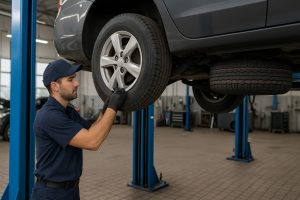
- Secure the car on a flat surface, engage the parking brake, place wheel chocks.
-
- Remove one wheel at a time; inspect pads through the caliper window.
-
- Measure pad thickness. Under 3 mm (⅛ inch)? Replace soon. Under 1 mm? Park it and call for service.
-
- Feel the rotor surface. Light grooves are normal; deep ridges mean the rotor may be too thin to resurface.
-
- Check brake lines for cracks or wet spots. Any fluid leak requires immediate repair.
-
- Look at the caliper piston boot. Torn rubber lets dirt in and seizes the piston.
-
- Re‑torque lug nuts to your owner’s manual spec and repeat on each wheel.
Reminder: If a wheel refuses to roll after reinstalling, your caliper might be sticking – don’t drive until fixed.
6. Drive or Tow? Deciding When It’s Too Risky
| Symptom | Safe to drive to shop? | Reason |
| Mild squeal, pad ≥ 3 mm | Yes, short trip under 45 mph | Pad wear indicator only |
| Grinding, metal contact | No | Rotor damage grows every stop |
| Pedal sinks to floor | No | Possible fluid leak → brake failure |
| Brake fluid on driveway | Tow | Leak could empty system en route |
| Car pulls sharply | Caution—short, slow trip only if no highway needed | Uneven caliper pressure |
When in doubt, call a mobile mechanic or a flatbed tow—cheaper than an accident.
8. Local Resources & Road Map for Emergency Stops
-
- 24‑Hour Parts: O’Reilly Auto Parts (Belt Line & Hampton) stocks rotors and DOT 4 fluid late nights.
-
- Test Hills: The gentle slope on E. Wintergreen Rd is perfect for low‑speed brake bedding after new pad install.
- Quiet Parking Lot: Behind David Carter High School – use evenings for slow‑roll checks without traffic.
9. Keep Your Brakes Healthy All Year
-
- Flush brake fluid every 24 months; humid Texas air pulls water into the system and lowers boiling point.
-
- Rotate tires every 6,000 miles; even tread keeps braking balanced on wet Lancaster lanes.
-
- Clean pad sliders during every tire rotation; gritty dust is the #1 cause of sticking calipers.
-
- Watch for roadway grit after spring thunderstorms – sand on I‑35E ramps eats pads and rotors.
- Drive smarter: Coast early toward the Pleasant Run red light instead of late braking. Pads last 30 percent longer.
- Watch for roadway grit after spring thunderstorms – sand on I‑35E ramps eats pads and rotors.
10. Take Action Today – Stay Safe Tomorrow
A smooth stop is silent. If your car growls, shakes, or pulls, your brakes are talking – and they’re saying “fix me now.” Use the checklist, road‑test route, and DIY steps above to spot trouble early. If any sign worries you, schedule a same‑day inspection with a trusted local shop or mobile technician. The roads of DeSoto move fast, but you can stop faster – when your brakes are healthy.
Conclusion
Good brakes keep you and your family safe on every street in DeSoto. When you hear squeaks, grinding, or feel your steering wheel shake, act fast. A quick pad change today costs far less than towing and rotor repairs tomorrow.
If you can’t drive to a shop, call a trusted mobile auto repair service. The technician can come to your driveway, replace worn pads, bleed fresh brake fluid, and have you stopping smooth again before lunchtime. Whether you choose a shop or a mobile mechanic, checking your brakes twice a year and fixing problems early saves money, prevents crashes, and keeps every ride calm and quiet.
FAQ
Most drivers in DeSoto pay between $280 and $350 for front pads and rotors or about $200 for rear drum shoes. Costs climb fast if rotors are deeply scored or calipers seize, so fixing small squeals early almost always saves money.
A loud squeal is the wear indicator scraping your rotor. It means the pad lining is thin—usually under three millimeters—and needs quick replacement. Driving too long after squealing starts can grind metal, warp rotors, and double your repair bill.
A spongy pedal points to air or moisture in the brake lines or a fluid leak. Either problem can cause sudden loss of stopping power on Belt Line Road or I‑35E. Have the system inspected or towed; topping off fluid alone will not solve the risk.
Several certified mobile mechanics serve DeSoto and can replace pads, rotors, or brake hoses at your driveway within a few hours. Mobile service keeps you off the road if your brakes pull, grind, or leak fluid, and prices are close to shop rates.
Pads on DeSoto city streets average 30,000 to 50,000 miles, but frequent stop‑and‑go on Hampton Road or I‑20 traffic can wear them out in as little as 20,000 miles. Checking thickness twice a year helps you catch wear before metal contacts metal.
Grinding, steering‑wheel vibration, a burning smell after hard stops, or a dashboard brake light paired with low fluid are red flags. Any of these signals can lengthen stopping distance on high‑speed stretches of I‑35E, so schedule repairs today.