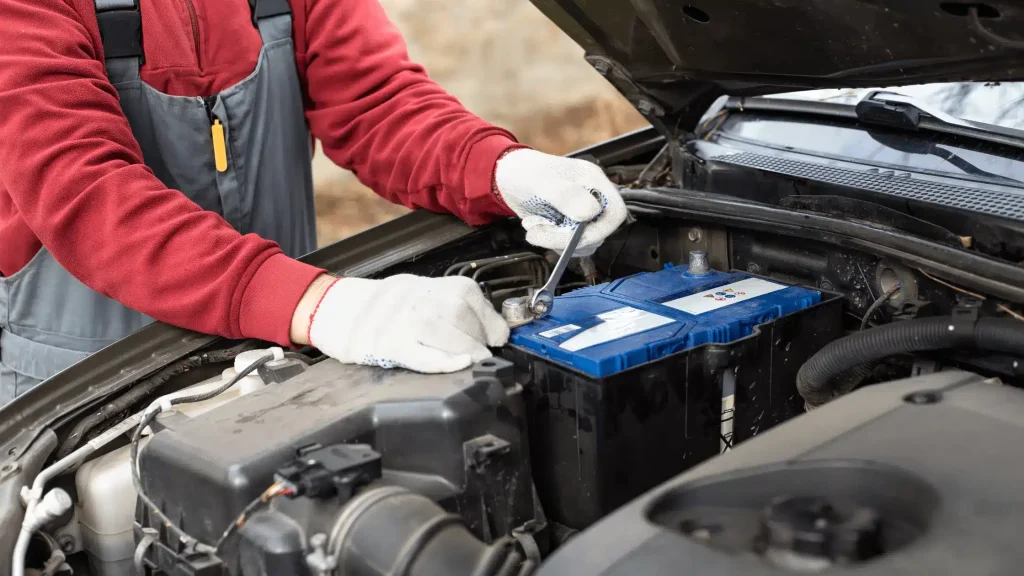
A car battery drains overnight when something keeps using electricity after the engine is off, such as an interior light, a faulty device, or an old, weak battery. If you’re trying to figure out how to stop a car battery from draining, this guide gives you the exact steps to fix the issue for good. We’ll show you how to identify common causes like parasitic drains, short trips, loose connections, and electronics that stay powered up. Then, you’ll learn 7 smart, easy fixes that anyone can do. Even if you’ve never worked on a car before, these solutions will help you avoid those frustrating mornings when your car won’t start. They’ll also make sure your battery lasts longer, charges properly, and stays strong overnight.
Table of Contents
How to Tell if Your Car Battery Is Draining Overnight
If your car struggles to start in the morning, it might not just be old age. A battery that drains overnight usually shows signs like a slow crank, dim lights, or the need for frequent jump-starts. Sometimes the battery seems fine during the day but dies after sitting still for several hours.
Here are common signs to watch for:
- Your engine cranks slowly in the morning
- Interior or dashboard lights are dim when you unlock the car
- You hear clicking when turning the key instead of a smooth start
- The car starts fine after driving but dies the next morning
- You need to jump-start the car more than once in a week
If you’re seeing one or more of these symptoms, your battery is likely losing power overnight. The good news is that most causes are simple and easy to fix.
Let’s go over the steps that can help you stop it from happening again.
1. Check for Lights Left On: Interior, Trunk, or Glove Box
One of the most common causes of overnight battery drain is a light left on. Interior dome lights, trunk lights, or glove compartment lights can stay on after you’ve walked away. Even small bulbs pull power all night and leave you with a dead battery by morning.
What to Do:
- Before leaving your car, check that all lights are off.
- Make sure doors, trunk, and glove box are fully closed.
- Manually switch the dome light to “Off” or “Door” mode — never leave it on.
- If it happens often, switch to LED bulbs that use less power.
Just one habit change here can stop repeated battery failures.
2. Test for Parasitic Battery Drain
A parasitic drain is when something in your car keeps using power after the car is turned off. It could be a faulty alarm, radio, dash cam, or even a stuck relay. These hidden drains are a major reason batteries lose charge overnight.
How to Test It:
- Turn the car off and wait 10–15 minutes.
- Disconnect the negative battery cable.
- Use a multimeter in “amps” mode to measure draw between the cable and the post.
- If the draw is over 50 milliamps, start pulling fuses one by one until it drops.
This tells you which circuit is the problem. If you’re unsure, many repair shops offer this test for free or at low cost.
3. Clean and Tighten Battery Terminals
Even if your battery is good, it won’t work right if the terminals are dirty or loose. Corrosion builds up and prevents the battery from charging fully while you drive, leaving it weak the next day.
What to Do:
- Disconnect the battery cables (negative first).
- Use a wire brush or battery cleaner to scrub corrosion from the terminals and cable ends.
- Reconnect the cables tightly (positive first this time).
- Use terminal grease or protector spray to prevent future corrosion.
This fix improves the power flow and helps your battery stay fully charged longer.
4. Drive Longer to Recharge the Battery Fully
If you only take short trips, your alternator doesn’t have enough time to recharge the battery. Over time, this creates a weak battery that dies more easily when parked overnight.
What to Do:
- Try to drive at least 20 to 30 minutes once or twice a week.
- Combine errands into a single trip instead of several short ones.
- Avoid idling to recharge — driving is more effective.
This habit gives your battery a full recharge cycle and prevents slow power loss.
5. Turn Off Electronics and Unplug Chargers
Modern vehicles often leave electronics powered even when the ignition is off. Leaving a phone charger, GPS, or Bluetooth adapter plugged in can slowly drain the battery while you sleep.
What to Do:
- Unplug all devices before turning off the car.
- Turn off the radio, headlights, AC, or other systems manually.
- Remove aftermarket accessories like dash cams or interior lights if they don’t shut off on their own.
This prevents constant low-level battery use that adds up overnight.
6. Replace a Weak or Old Battery
Batteries wear out over time and eventually stop holding a full charge. Even without any drains, an old battery can lose enough power overnight to leave your car unable to start.
What to Check:
- Most batteries last 3 to 5 years. Check the manufacture date.
- Test battery voltage with a multimeter. A healthy battery should read 12.6 volts or more.
- If your battery drops under 12.4 volts after sitting overnight, it may be too weak to keep using.
If your battery is near the end of its life, replacing it is the most reliable fix.
7. Use a Kill Switch or Trickle Charger for Long Parking Times
If your car sits for several days without driving, even small standby power use can drain the battery. Using a battery kill switch or trickle charger helps maintain power without damage.
Your Options:
- Kill Switch: Installs on the battery terminal and disconnects power when flipped. Great for cars that sit unused for days or weeks.
- Trickle Charger: Plugs into a wall outlet and keeps the battery topped up slowly. Ideal for garage-stored vehicles or infrequent driving.
These tools are simple, safe, and inexpensive — and they protect your battery from going flat during long downtimes.
Conclusion: Keep Your Battery Alive Overnight With Simple Fixes
If your car battery keeps dying while parked, you’re not alone. But you do not have to keep dealing with it. Learning how to stop a car battery from draining overnight comes down to changing a few habits and checking for common issues. Most problems are caused by things like lights left on, hidden electrical drains, or a weak battery that can no longer hold a charge.
Now that you know the 7 smart fixes, including unplugging electronics, cleaning battery terminals, testing for power draws, and replacing an old battery, you can take control and prevent future issues.
Take a few minutes to go through these simple steps. You will save time, avoid morning delays, and feel confident that your car will start reliably every day. No more guessing, no more jump-starts, and no more surprise battery failures.
FAQs
This usually indicates a parasitic drain, where an electrical component like a trunk light or faulty relay stays active after the ignition is off. Mr. Desoto Mobile Mechanic recommends performing a “draw test” with a multimeter; if the reading exceeds 50 milliamps while the car is asleep, you have an active circuit pulling power. Identifying this early prevents permanent lead-acid sulfation, which eventually ruins the battery’s ability to hold any charge at all.
To differentiate between a dead battery and a drain, test the voltage with a multimeter after the car has sat for several hours. A healthy battery should read 12.6V. If it reads below 12.2V but jumps back to life and maintains voltage while the engine is running (13.7V–14.7V), your alternator is fine, but something is likely “stealing” power overnight. If the battery won’t hold a charge even after a long drive, the internal cells are likely spent.
Yes, in many vehicles, the 12V cigarette lighter socket remains “always-on” even when the key is removed. While a single charger draws very little, older batteries or chargers with internal LED lights can create enough of a cumulative draw to prevent a cold start in the morning. Mr. Desoto Mobile Mechanic advises unplugging all USB adapters and dash cams to eliminate these “vampire loads” as the first step in troubleshooting a weak start.
A short 5-minute trip to the grocery store is not enough to replenish the energy used to start the engine. You typically need to drive for at least 20 to 30 minutes at highway speeds to allow the alternator to provide a deep charge. For vehicles that sit frequently, Mr. Desoto Mobile Mechanic suggests using a dedicated trickle charger (battery maintainer) rather than idling the engine, as idling produces less amperage and is less efficient for battery recovery.
Surprisingly, yes. Corrosion and “acid film” on top of the battery case can actually create a conductive path between the positive and negative terminals, causing a slow discharge. Mr. Desoto Mobile Mechanic emphasizes cleaning terminals with a mixture of baking soda and water to neutralize acid. Ensuring your connections are tight and free of white powdery oxidation improves the charging efficiency of your alternator and prevents “phantom” power loss.
Cold temperatures don’t necessarily “drain” a battery, but they significantly reduce its chemical capacity. At 0°C (32°F), a battery loses about 20% of its power, and at -18°C (0°F), it loses 50%. If your battery is already weak or aged beyond three years, the cold makes it impossible for the battery to provide the high “cranking amps” needed to turn over a cold, stiff engine.
In the experience of Mr. Desoto Mobile Mechanic, the most frequent culprits are “stuck” relays or non-factory electronics like aftermarket alarms and remote starters. Another common issue is the glove box or vanity mirror light remaining on because a plastic clip has broken, preventing the switch from depressing. A quick way to check is to feel the surface of the glove box or trunk after the car has sat; if it feels warm, a bulb is likely burning inside.
If you don’t have access to a trickle charger, disconnecting the negative terminal is a smart way to stop all power consumption. Modern cars have “computers” that stay in standby mode, which can deplete a battery over 14–21 days. However, be aware that disconnecting the battery may reset your radio presets, clock, and in some modern luxury cars, require a “relearn” process for the electronic throttle body.